 Bayu Permadi
Note: This case study is an illustrative scenario based on challenges that businesses commonly face. The company name, figures, and results are examples and do not represent data from any specific client.
Keeping the Factory Running During an Infrastructure Migration
In today’s fast-moving industrial landscape, a close look at an ERP to cloud migration case study is a valuable reference for IT directors and decision-makers who want to reduce operational risk. For a manufacturer running around the clock, taking its enterprise resource planning (ERP) system offline, even for a few hours, can lead to substantial financial losses. Legacy infrastructure that has supported production lines for years is often a double-edged sword: it is stable, but also rigid and expensive to maintain. Moving to a modern cloud environment is no longer just an option for improving efficiency. It is a strategic requirement for staying competitive as industry digitalizes.
Why Legacy System Inefficiencies Hold Back Business Growth
Legacy ERP systems running on on-premise servers often see performance degrade as the factory’s daily transaction volume grows. Limited physical storage capacity, slow real-time inventory reporting, and the rising cost of maintaining aging hardware are challenges IT management teams face every day. Worse, these older systems are typically difficult to integrate with advanced analytics or modern API-based supply chain platforms. As a result, the company loses the end-to-end visibility it needs for fast decision-making, which in turn limits its room for market expansion and product innovation.
Understanding the Risks and Obstacles of Migrating Without Operational Disruption
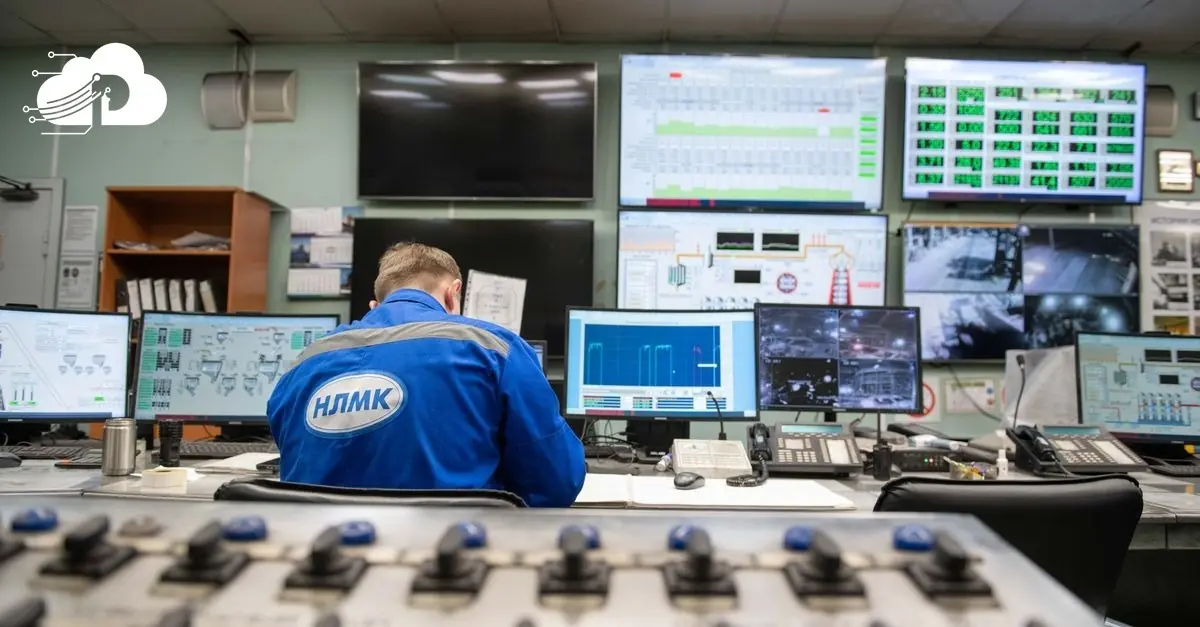
For most manufacturing directors, the biggest worry in any technology migration is unplanned downtime on the production floor. Through a close analysis of an ERP to cloud migration case study in the manufacturing sector, we found that failed transitions are often caused by rushed migration strategies and inadequate data risk mitigation. Data synchronization between production machines on the floor (Operational Technology) and the central ERP in the cloud must run smoothly, with no data packet lost or corrupted during the changeover.
Technical Obstacles and the Complexity of Manufacturing Data Integration
Data architecture in manufacturing is highly complex because it ties planning systems closely to manufacturing execution systems (MES) and IoT devices on the floor. When data from a monolithic legacy database is moved into a cloud structure, differences in database schemas and network latency often create significant operational obstacles. This is where a reliable technology partner matters: mapping every system dependency before the physical migration begins. Pandawa Cloud .Net understands that every second on the assembly line counts, so every stage of a migration should be designed with a zero-impact approach.
ERP to Cloud Migration Case Study: Key Lessons from the Factory Floor
In an ERP to cloud migration case study involving a large automotive component manufacturer with multi-plant operations, the main challenge was moving a multi-terabyte ERP database without stopping the shipping system. A conventional strategy requiring a weekend maintenance window of dozens of hours was rejected outright because the potential operational loss was too great. By applying asynchronous real-time data replication, the engineering team kept the on-premise database in sync with the new cloud database for several weeks before the final switchover. The cutover of data traffic was then completed in a matter of minutes, during the quietest shift change.
A Resilient Cloud Architecture Approach from Pandawa Cloud
This outcome shows that an ERP to cloud migration case study is not just theory on paper. It is achievable with careful, precise cloud architecture planning. Pandawa Cloud .Net offers a hybrid architecture approach that lets manufacturers transition in stages (phased migration) rather than through a radical big-bang migration. With this approach, critical modules such as inventory management and procurement can be moved first, while the core production modules continue running reliably on local infrastructure until the new system is fully validated.
Phased Migration and Real-Time Data Replication Strategy
This staged approach reduces the risk of systemic failure because the IT team can monitor, test, and optimize each newly migrated module in isolation. With secure, encrypted data replication, operational data stays consistent across both environments (on-premise and cloud) without sacrificing factory network performance. According to a global research report on digital transformation from McKinsey & Company, flexible, phased system integration is a key factor in successful digitalization in heavy manufacturing. Pandawa Cloud .Net designs every cloud architecture with a priority on high system resilience, multi-zone redundancy, and automated disaster recovery.
Financial and Operational Impact After a Successful Migration
Once the migration is complete, the business impact for the manufacturer is significant and shows up directly in the financial statements. Capital expenditure (CapEx) for physical servers becomes operating expenditure (OpEx) that is far more flexible and predictable, in line with actual usage. Supply chain management gains real-time visibility into inventory from multiple branch warehouses on a central dashboard, speeding up logistics decisions by thirty percent. Month-end transaction processing that previously took days can now be completed in hours, thanks to the dynamic scalability of cloud computing.
Moving Forward Safely with Pandawa Cloud as a Strategic Partner
When we evaluate any ERP to cloud migration case study, the main measure of success lies not only in the technology used but in the quality of the partnership throughout the transition. Pandawa Cloud .Net acts as a trusted strategic advisor (wise peer), working alongside your internal IT team from the initial assessment through post-migration optimization. We do not simply offer cloud server capacity. We provide a comprehensive solution designed to meet regulatory compliance, industry data security standards, and the high performance that a modern production floor requires.
Building a Migration Blueprint Tailored to Your Company
The first step toward a low-risk transformation is a thorough understanding of your company’s current application landscape and data architecture. Our cloud solution architects will work closely with your IT team to design a migration blueprint that carries the least risk and is the most cost-effective. In these in-depth consultation sessions, we will help map system dependencies, identify potential network bottlenecks, and define clear migration success metrics. Let’s secure the future of your manufacturing operations by building a digital foundation that is resilient, flexible, and ready for the demands of the global market.