 Bayu Permadi
Note: This case study is an illustrative scenario built from challenges that businesses commonly face. The company name, figures, and results are examples only and do not represent any specific client’s data.
Addressing Downtime Before It Becomes a Business Crisis
In a digital era that moves this quickly, the stability of your technology infrastructure is the foundation of customer trust. When a system fails, every lost minute is more than a technical problem. It means real financial loss and reputational damage that is hard to repair. In this article, we will examine this MTTR reduction case study in depth, giving IT decision-makers a realistic picture of how incident management can be fundamentally transformed.
The Hard Reality Behind the War Room
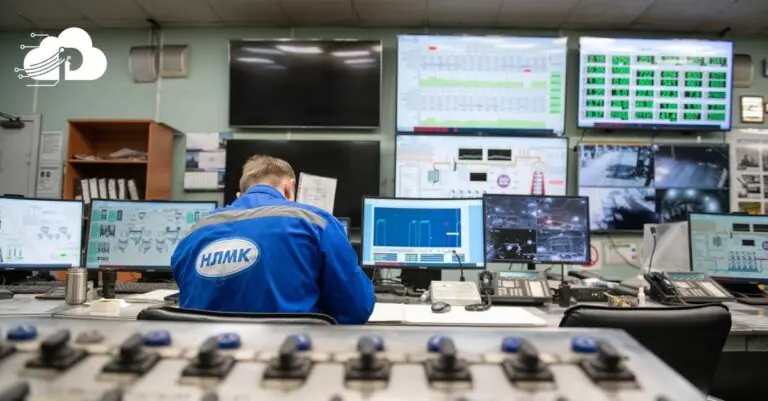
For most CTOs and Heads of Engineering, the “war room” that forms when a system goes down is the moment they most want to avoid. With the board applying pressure and customer complaints flooding the support channels, engineering teams often get stuck in unfocused diagnosis. Without clear visibility, identifying the problem becomes very slow because each team points at another: the network team blames the cloud provider, the database team insists their performance is normal, and the application team searches for a bug across thousands of lines of code. This shows that traditional monitoring can no longer handle the complexity of modern distributed architectures.
Why Reducing MTTR Has Become the Most Critical KPI
Mean Time to Resolution (MTTR) is more than an internal engineering metric. It is an indicator of overall business health. A high MTTR points to inefficiencies in detection, diagnosis, and mitigation. In a highly competitive market, how quickly you respond to disruptions is a key difference between companies that lead and companies that fall behind. Reducing MTTR gives development teams their time back, so they can focus on product innovation instead of constantly firefighting an unstable system.
Why Traditional Monitoring Architectures Often Fall Short
Many companies feel secure because they have invested heavily in a range of monitoring tools. But having dozens of siloed dashboards creates a new cognitive burden for operations teams. When an incident occurs, the team has to check each dashboard manually, roughly match timestamps, and guess at correlations between events. A reactive approach like this will never keep pace with the complexity of microservices-based applications and highly dynamic modern cloud infrastructure.
The Gap Between Conventional Monitoring and Modern Observability
Conventional monitoring only tells you *when* something is not working properly, through rigid threshold alerts. The modern approach, supported by standards from the Cloud Native Computing Foundation (CNCF), focuses on understanding *why* it happened, from inside the system itself. With a unified approach, teams no longer grope in the dark. This is an essential foundation of every successful MTTR reduction case study across industries worldwide today.
Integrating the Three Core Pillars: Metrics, Logs, and Traces
The key to a fully observable system is the seamless integration of three main types of data. Metrics provide high-level indicators such as CPU usage or API latency in real time. Logs provide detailed event records at the application level for in-depth analysis. Traces map the journey of each request from the end user through multiple microservices to the database. Bringing all three pillars into a single platform removes technical blind spots and shortens root-cause localization from hours to seconds.
How Unified Observability Reduces MTTR
Consider an example: a mid-sized fintech company whose transaction volume was growing rapidly but was repeatedly held back by inconsistent database latency. Before adopting a unified system, resolving an incident took an average of 4 hours, because it was so hard to trace the problematic database query behind a stack of microservices. After implementing the new strategy, that duration fell sharply to under 45 minutes, equivalent to a consistent MTTR reduction of more than 70%.
The Transformation: From Manual Detection to Automated Correlation Analysis
The transformation began by replacing fragmented monitoring tools with a single agent that integrates all system telemetry. When transaction failures spike, the system automatically correlates API performance metrics with the specific error logs and the traces of the failed transactions at the same moment. Engineers no longer have to guess which query is slow or which microservice is overloaded, because the platform immediately presents a visualization from the first point of failure to its impact on downstream services.
Financial Impact and Engineering Team Productivity
When we look at the concrete results of this MTTR reduction case study, the most noticeable impact is the disappearance of the tense ‘war room’ and higher job satisfaction among engineers. From a business perspective, the reduced downtime saved hundreds of millions of rupiah in potential lost transactions and kept the Service Level Agreement (SLA) at 99.99%. Investor and customer confidence rose significantly as the system became far more stable and reliable under seasonal traffic spikes.
Building a Resilient System with Pandawa Cloud .Net
Adopting a modern monitoring system is not about buying the most expensive tools. It is about designing an implementation strategy that fits your business’s particular architecture. Many organizations stall midway because of the complexity of the initial configuration and the high overhead of managing the monitoring infrastructure itself. This is where a strategic partner becomes essential, helping ensure your technology investment delivers real ROI in a short time.
First Step: Audit and Assess Your Infrastructure Maturity
The first step toward replicating the success of this MTTR reduction case study is a thorough evaluation of your current infrastructure. The expert team at Pandawa Cloud .Net can work with you to identify visibility gaps, simplify your telemetry collection architecture, and map out implementation steps without disrupting ongoing business operations. We aim to make the transition smooth and low-risk.
Why Choose Pandawa Cloud .Net as Your Strategic Partner
As a trusted cloud solutions provider, Pandawa Cloud .Net does more than supply infrastructure. We act as a Strategic Advisor who understands the link between technology performance and business success. We help build custom dashboards that are relevant to engineering teams while also presenting business metrics that senior management (C-Level) can easily understand. Contact our specialists today to start a consultative discussion and explore how we can help protect your company’s digital operations from costly downtime.