
 Bayu Permadi
Note: This case study is an illustrative scenario based on challenges commonly faced by businesses. The company name, figures, and results are examples and do not represent any specific client’s data.
Why Early Detection of Data Breaches Matters for Fintech
As the financial technology industry grows rapidly, cybersecurity is no longer just a matter for the IT department. It is a core pillar of business continuity. In this analysis, we examine how an early detection data breach case study can protect the reputation and financial assets of a national fintech institution. As a decision-maker, you know that a single small gap in how customer data is stored can undo public trust built over many years. The threat is real and constantly evolving, and it often goes unnoticed until major damage has already been done. That is why it is worth understanding modern preventive tactics that do not simply react after an incident, but anticipate it well before a compromise goes any further.
The Reality of Financial Cyber Threats
Fintech companies now process millions of sensitive transactions every day, which makes them a prime target for financially motivated international cybercriminals. Credentials, credit card information, and personal transaction histories are high-value commodities on the dark web. According to sector-level cybersecurity reports, financial services have seen the frequency of ransomware attacks and data breaches rise to nearly double that of previous years. Failing to detect suspicious activity at an early stage often leads to direct financial losses, heavy regulatory fines, and even the loss of an operating license. For this reason, technology leadership in your company should view cloud security not as a cost center, but as a strategic competitive advantage.
The Systemic Impact of Failed Protection
When a data breach hits a fintech ecosystem, the knock-on effects reach far beyond the financial losses visible on the balance sheet. A sudden collapse in public trust can trigger mass withdrawals by users, which in turn can lead to a severe liquidity crisis that threatens the company’s operations. According to the cost analysis in the IBM Cost of a Data Breach Report, the average cost of recovering from a data breach in the financial sector reaches millions of US dollars per incident. Lawsuits from third parties and administrative sanctions from regulators such as the Financial Services Authority (OJK) can also halt your business activities permanently. To prevent this worst-case scenario, CTOs and CISOs need full visibility into every anomaly that occurs within their cloud infrastructure, without exception.
How Data Breaches Happen in Cloud Architecture
How Cloud Architecture Vulnerabilities Unfold
Most data breaches in cloud environments are not caused by weaknesses in the cloud platform itself, but by internal misconfigurations that go unnoticed. In fintech operations, the rapid integration of legacy systems with third-party APIs often creates security gaps that are poorly monitored. Attackers typically exploit these gaps in stages, from passive reconnaissance through to privilege escalation. Without adequate real-time monitoring, suspicious activity such as a bulk data transfer to an unknown external IP address can be mistaken for normal traffic. Understanding these attack patterns shows that conventional reactive approaches are no longer enough to counter increasingly sophisticated and organized cyber tactics. Through this early detection data breach case study, we can see how proactively mapping your security architecture can close these critical gaps before malicious actors exploit them.
Why Traditional Approaches Fall Short
Traditional security approaches that rely only on perimeter firewalls and scheduled scans have proven ineffective against advanced persistent threats (APTs). These legacy systems often generate too many false positives, which wear down your IT security team, a phenomenon known as alert fatigue. While your team sorts through thousands of irrelevant alerts, a real threat slowly working its way into your main database can slip by unnoticed. In addition, simple encryption of data at rest is no longer sufficient if the encryption keys are managed in an environment vulnerable to unauthorized access. Artificial intelligence and behavioral analytics are needed to tell legitimate day-to-day operational activity apart from carefully planned, structured intrusion attempts.
Early Detection in Practice
An Early Detection Case Study with a Fintech Partner
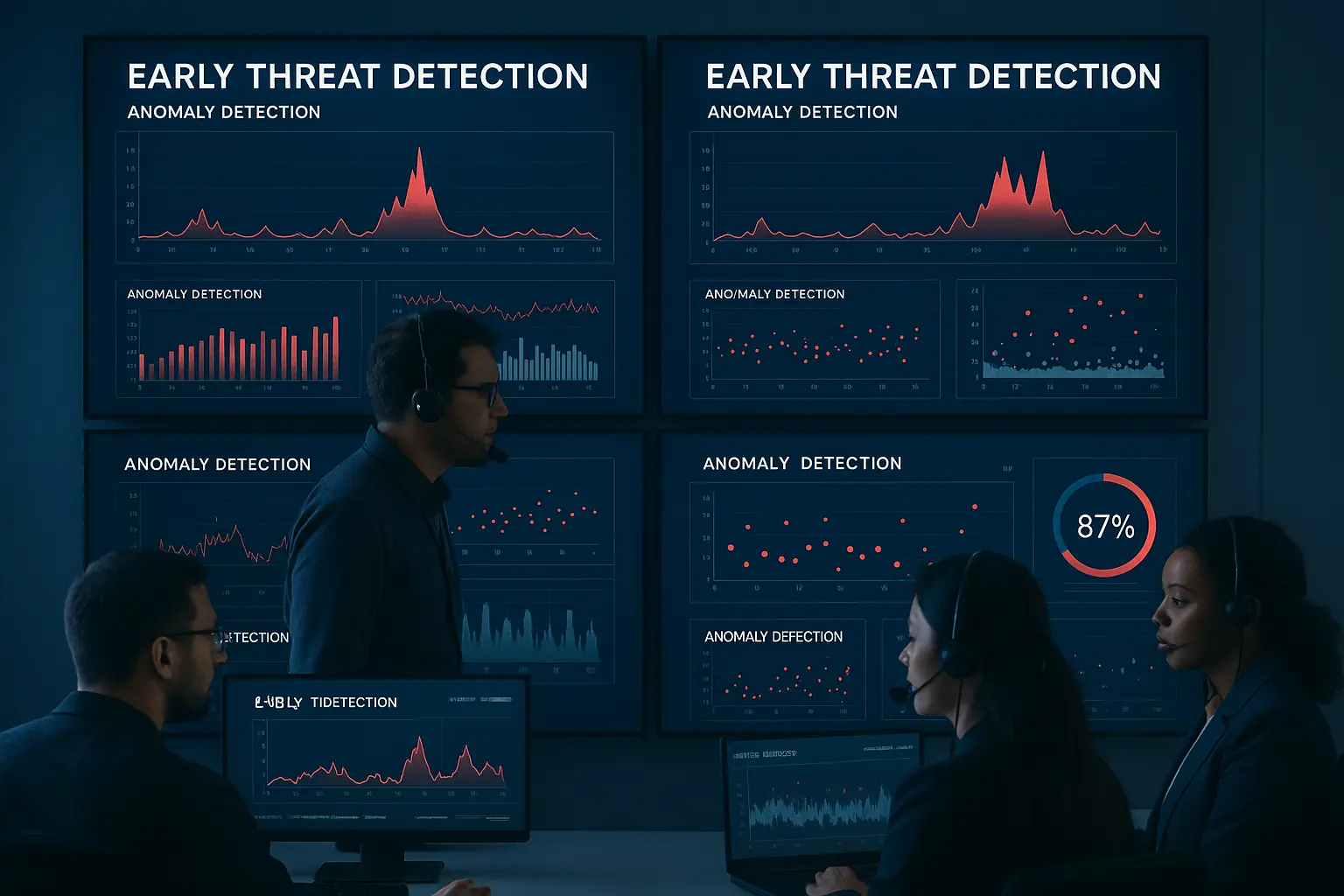
Let’s walk through an early detection data breach case study involving a leading fintech partner that adopted an advanced security architecture from Pandawa Cloud .Net. Before adopting our platform, the partner faced a major challenge: a high daily volume of illegal access attempts against their API gateway. After implementing a Machine Learning-based early detection system, our platform identified an anomaly: a two percent spike in data transfer activity outside normal operating hours. The system automatically isolated the compromised user account in under three minutes, preventing the exposure of personal information belonging to more than five hundred thousand active customers. The outcome of this early detection data breach case study shows that an instant automated response at the infrastructure level can save tens of billions of rupiah in potential losses.
Moving Toward Proactive Cloud Security
Adopting a proactive security mindset means shifting your team from simply defending to actively hunting threats before they strike back (threat hunting). With the Cloud Security architecture designed by Pandawa Cloud .Net, every layer of your infrastructure is closely monitored using Zero Trust Architecture principles. Every request to access a database must pass layered verification, regardless of where in the internal network the request originates. This approach ensures that if an attacker breaches one network segment, other critical segments remain fully protected from lateral movement. The end result is a resilient digital ecosystem in which your fintech business can innovate quickly without worrying about reputation-damaging data breaches.
Steps to Start a Cloud Security Audit
Starting a Security Audit of Your Architecture
Securing your company’s valuable assets starts with identifying the weak points in your current cloud architecture through a comprehensive audit. Our experts at Pandawa Cloud .Net can help you map all of your data flows, assess your API configurations, and analyze how effective your current early detection systems are. Don’t wait for a damaging security incident to find out whether your cyber defenses are strong enough or still vulnerable. Based on the scenario in this early detection data breach case study, planned preventive action consistently delivers a far higher return on investment (ROI) than the cost of recovering after an incident. We will develop a security roadmap tailored precisely to the operational scale and regulatory compliance requirements of your fintech business.
Partnering with Pandawa Cloud .Net
Reliable cybersecurity is not a one-time purchase. It is a long-term strategic partnership built on trust and deep expertise. Pandawa Cloud .Net is a trusted partner (a wise peer) that supports your company’s digital transformation with local cloud solutions that are secure, regulation-compliant, and high-performing. We understand the complexity of financial regulation in Indonesia and design our services to meet strict national compliance standards. Contact our senior consulting team today for an in-depth discussion about securing your cloud infrastructure, with no upfront commercial commitment. Let’s build a solid digital foundation so your fintech business can grow quickly, stay secure, and lead the market with confidence.